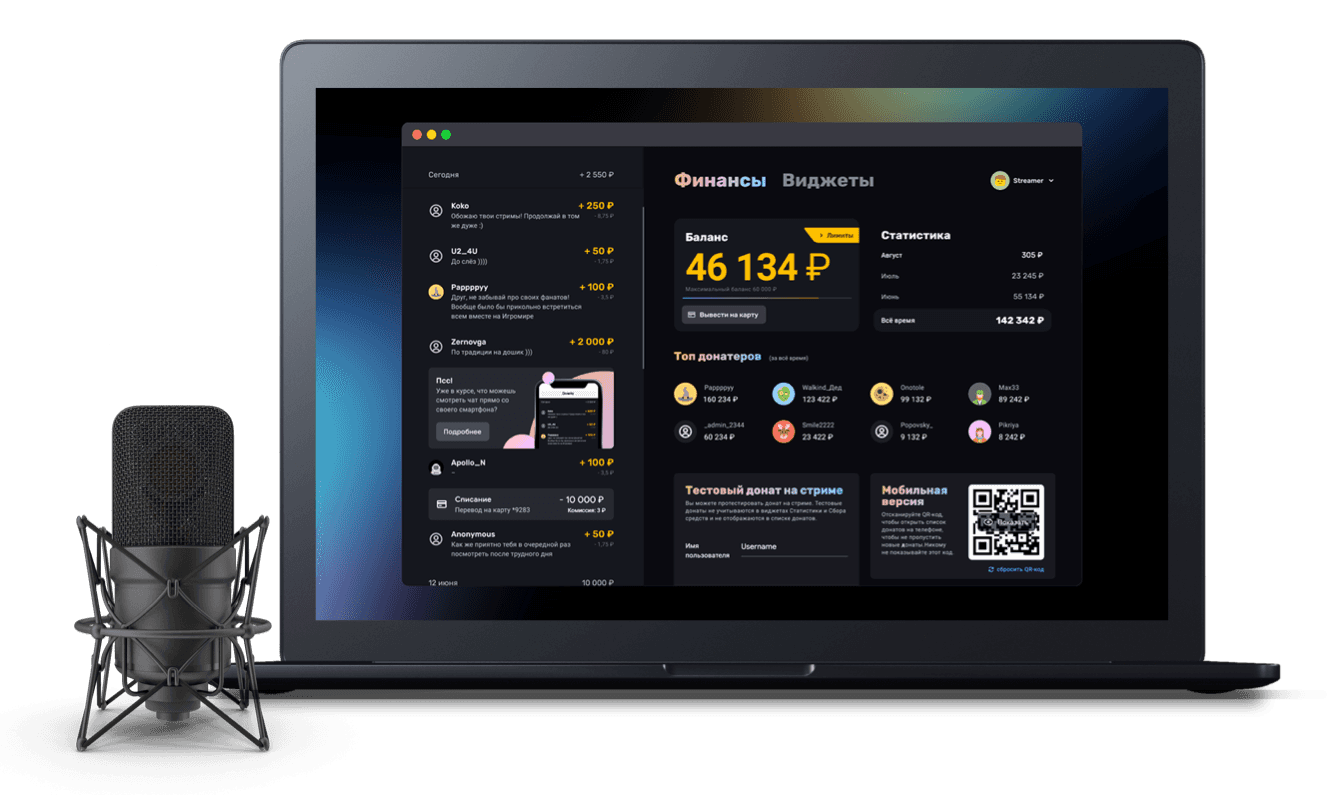
The ultimate tax guide for streamers
Most streamers in Russia don’t worry about taxes. Some think the platform pays them for them, others assume their income is not taxed. We work out how things really stand

Product Manager at Donatty
Published:
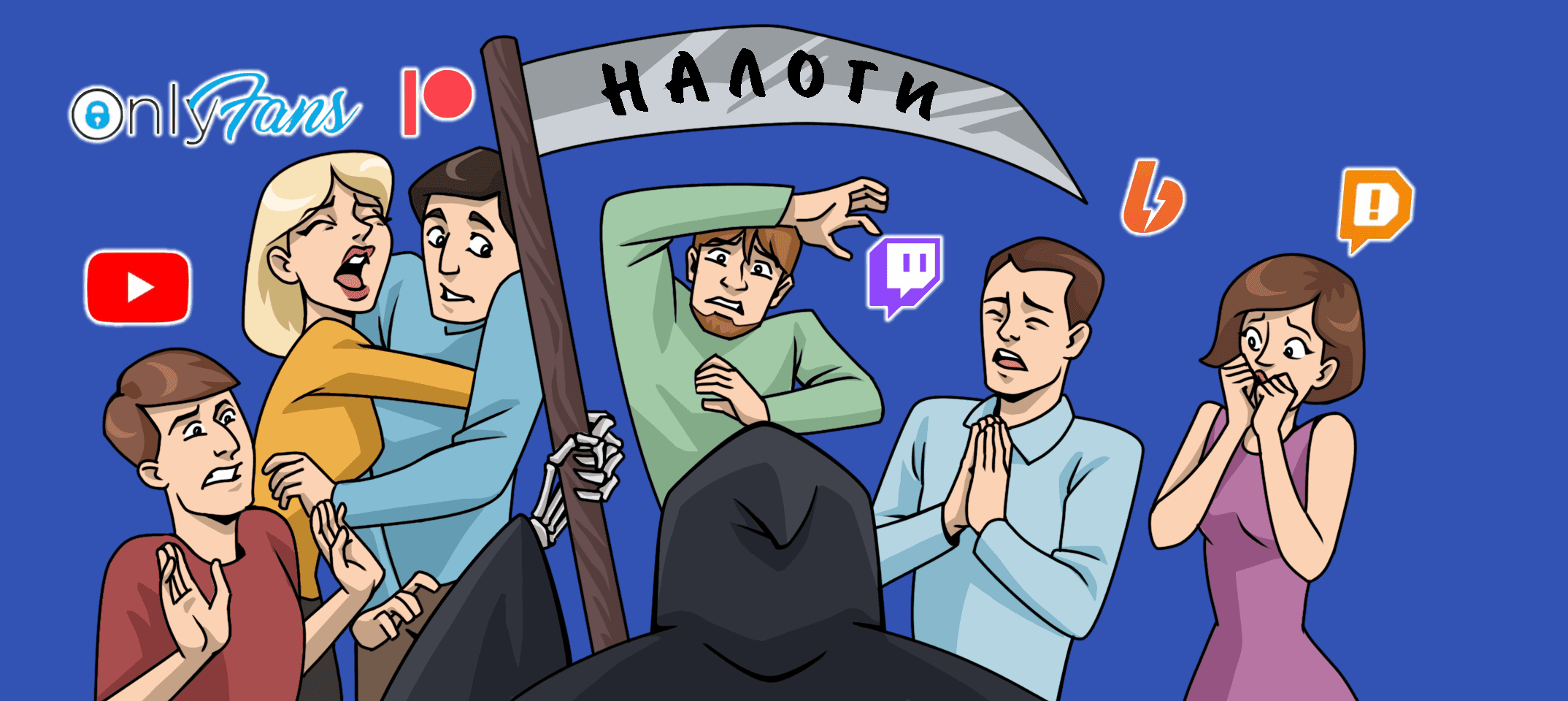
Most streamers in Russia don’t worry about taxes: some think the platform pays them, while others believe that no funds are withheld from their income for the state.
However, this approach can be dangerous: if the Federal Tax Service (FNS) catches you red-handed, it will issue a large fine (up to 40% of all unpaid taxes) and make you pay late-payment interest, and if the amount was substantial, a criminal case may be opened.
In Russia, taxes are levied on any income except donations and gifts. For ordinary people (individuals) the tax rate is 13% — paid by the employer or the client. In this case the hiring party acts as an agent, that is, it pays the tax by deducting it from the income, on the individual’s behalf.
For example, if a streamer ran an ad on their channel and the client was supposed to pay 1,000 rubles, the client will transfer only 870 rubles to the streamer’s card, because it will deduct 13% and send 130 rubles to the tax authority.
But if the client is not in Russia or is an individual, then the tax has to be paid by the person who received the income.
It is important not to confuse tax with the commission of a platform or payment system. A commission is the money a platform takes from a streamer for its services. The platform keeps this money as its own income and does not send it to the tax authority.
Tips
In short: you don’t have to pay tax, but you should be careful.



Tips are the most common source of a streamer’s income. Viewers donate money and write a message, and the streamer reads it out. Tips can be sent directly to a card or through some special receiving service.
According to clause 18.1 of Article 217 of the Tax Code of the Russian Federation, tips are, from the point of view of the law, donations and are not taxed.
But it is important to read the user agreement carefully: in it, a tipping platform always defines the nature of the funds it handles. And sometimes there can be tricks there.
Make sure your money is designated as donations, not as “remuneration for services”. It is enough to define tips as “remuneration” — and they immediately become taxable.
Let’s look at an example with the Donatty offer, in which users’ payments are defined as donations:
“Gift”, “Tip” … funds donated by Internet users to the User for their support…
Everything is fine in the DonationAlerts agreement too:
The DA Platform… allows registered users (“Streamers”) … to receive funds as a gift from such Users…
But the DonatePay agreement already features “streamer’s services” and “remuneration”:
We will pay you the remuneration, as a rule, within 3 banking days after receiving your request (depending on the payment method and the payment processing partner).
Income from Twitch
In short: you have to pay tax.

Tax is withheld on all income you receive from the Twitch service. According to the standard agreement, streamers can have the following kinds of earnings:
Bits Revenue Share (a share of revenue from Bits).
Product Purchase Fee (a fee for buying a product).
Net Subscription Revenues (revenue from subscriptions).
Special Program Fees (payments for taking part in special programs).
Advertising-Based Revenue (income from advertising).
In all cases this income is not donations, which means part of the funds received needs to be set aside for taxes.
You can read more about monetization in our article “The ultimate guide to monetizing streams on Twitch”.
Some streamers are convinced that Twitch deals with taxes instead of them because users send the service a special W-8 form, but this is a misconception. The form is needed by the platform, which pays its own taxes in the US, to reduce their amount, but it does not exempt a streamer in Russia from taxes.
In its FAQ section Twitch writes:
Under certain conditions you can claim a reduced US income tax rate (for example, if your country of residence has concluded a double taxation avoidance agreement with the US).
The Russian Federation has a double taxation avoidance agreement with the US, so you can contact Twitch to reduce the amount of tax paid by the platform on your behalf in the US, but we couldn’t find a single mention of the results of such a request.
Alas, in this situation you need to go to the Russian tax authority.
Income from YouTube
In short: you have to pay tax.

Everything described for Twitch also applies to YouTube. Under the YouTube Partner Program there are the following sources of income:
Advertising
Sponsorship
A merchandise section
Super Chat and Super Stickers
YouTube Premium
Regardless of the source, all income from YouTube is taxable.
Here is what YouTube writes in its help article on earnings:
…under the laws of your country, you may be required to pay taxes on all funds earned from monetizing videos.
Patreon
In short: you have to pay tax.

Income on Patreon is also not donations, which means it is taxable.
Here, for example, is one of the answers on the Patreon site:
— Is the money I earn from Patreon classified as ‘taxable income’?
— In many jurisdictions across Europe your income is classified as taxable income.
In other words:
— Is the money I earn on Patreon classified as income subject to taxation?
— In many European countries your income is classified as subject to taxation
OnlyFans
In short: you have to pay tax.

On the OnlyFans site we couldn’t find a direct statement about the nature of the funds paid out or information about taxes, but the tax consultant Chris Whalen writes in the blog:
The money that you are paid by OnlyFans will not have any taxes taken out of it and so you will have to pay estimated taxes yourself during the year.
In other words:
OnlyFans does not pay taxes for you on the money it pays you, so you must pay taxes yourself during the year.
Boosty
In short: you have to pay tax, but only on subscriptions.
Here you can earn money from subscriptions, purchases of access to a separate post, and also direct tips.
In the user agreement Boosty describes this as follows:
On subscriptions:
The Boosty platform … allows … to use its available functionality … to give Users access to content …, created by Authors … for a remuneration, the amount of which is determined by the Author (“Author’s Remuneration”);
On tips:
The Boosty platform also allows registration and use … of Boosty Services when interacting with the “VK Donut” functionality, … the “Donations” functionality on the Odnoklassniki social network…
Tips stay untouched, but the other sources of income are taxable. Here is how Boosty support comments on this issue:
Under Russian law, donations from individuals to individuals are not taxed. We also do not act as a tax agent, and we do not withhold any additional taxes from users.
Payment for a subscription or a separate post is treated as the provision of a service, and it is advisable to declare the tax on this amount. We are outside the jurisdiction of the Russian Federation and are not a tax agent for our authors.
Advertising contracts
In short: you have to pay tax if your agent doesn’t pay it for you.
For large streamers advertising contracts often become the main source of income. They can be concluded on a “monthly” basis or under the CPA model, where the client pays for a conversion: for example, an install or a purchase of a game.
Regardless of the payment model, you can’t avoid taxation of such income. Even if you don’t sign a full contract but join an offer in the control panel of your tipping platform, as, for example, with advertising offers from DonationAlerts.
Sometimes an advertising agency or platform can act as a tax agent. In that case the agent itself will file the return for the streamer and pay all the necessary taxes.
When signing a contract it is better to discuss this issue thoroughly: if the tax inspectorate starts an audit, problems will arise for both the streamer and the agency or platform.
You can check the client’s good faith in this matter in the taxpayer’s personal account on the FNS website.
In addition, we asked for comments from Streamers Alliance. Company representatives noted that streamers register as sole proprietors (IP) and, accordingly, pay taxes on income from advertising contracts.
What happens if you don’t pay taxes
In short: bad, if you get caught
While a streamer’s income is small, the tax authority is unlikely to pay attention to it. But when the amounts start to be measured in hundreds of thousands of rubles a month, the bank or the FNS may have questions that the streamer may not be able to answer.
In this case the streamer faces the following:
The bank blocking the card.
A fine for not filing a return: 5% of the tax amount unpaid under the return for each month, but no more than 30% of that amount and no less than 1,000 rubles.
A fine for unpaid tax: from 20 to 40% of its amount.
Late-payment interest: 1/300 of the Central Bank key rate for each day of delay over the last three years.
If the debt exceeds 900 thousand rubles, criminal liability may follow as well.
Let’s look at the possible sanctions with a concrete example. Say that over a year a streamer received 100 thousand rubles a month, so over the year they earned 1.2 million rubles.
Sanction | Amount |
|---|---|
Taxes owed | 156,000 rubles |
Fine for not filing a return | 46,800 rubles |
Fine for unpaid tax | 62,400 rubles |
Late-payment interest | 8,000 rubles |
In total 117,000 rubles in fines, and on top of that you will also be made to pay the principal tax amount of 156,000 rubles.
And you can also be pinned with illegal entrepreneurship. Kontur.Elba has an excellent article on how that works.
Three ways to go about paying taxes (if you have decided to after all)
In short: it is best to become self-employed and pay NPD
To pay income tax, a streamer can:
By April 30 of the current year, file an income return for the past 12 months and pay 13% tax, relying on the information from this article. You can do this through the taxpayer’s personal account or directly at the tax office.
Register as a sole proprietor (IP), switch to the simplified tax system and pay 6% of income. This is a rather complicated option, but some large video bloggers and streamers take exactly this path. Instructions — on the Gosuslugi website.
Become self-employed and pay the tax on professional income (NPD). This method is similar to the sole proprietor option (the tax rate is the same — 6% when working with legal entities) but much simpler. It is enough to download a special app, log into it through Gosuslugi and start recording your income in it. Here are the instructions.
Donatty public API: your own bot for tips and goals
Your channel's tips, goals and tipper leaderboard can now be pulled into your own program: a bot, your website or another service. Here is what you can build and where to start.
Read more
Donatty ambassador program: free PRO plan
Tell your audience about Donatty — and we give you the PRO plan. Any channel with 100 or more followers qualifies. Here is what PRO includes, what you need to do and how to join.
Read more
November 7 release: fee compensation and two new alerts
Fee compensation is now visible in Finances, and tips with compensation and tips with media can have a separate alert. We show it in a video and explain how to set it up.
Read more